Metro
Delhi Metro CC-04, Azadpur
Two tunnel boring machines were held about 30 m below ground near the Gurudwara emergency egress shaft at Rameshwar Nagar, Azadpur, in loose, saturated ground with the water table 6.30 m down. We controlled the water and consolidated the ground around them, and the machines were retrieved.
- Period
- January to March 2017
- Location
- Gurudwara emergency egress shaft, Rameshwar Nagar, Azadpur
- Type
- Metro shaft and tunnels
- End client
- Delhi Metro Rail Corporation
- Contractor
- CEC-CICI JV
Project recordRecorded in our project register and case study, January to March 2017.
Tunnel boring machines retrieved.
Depth of the water table below ground.
Approximate depth of the machines.
- Water ingress controlled.
- The machines retrieved.
The problem
Loose sand flowing in under water pressure
The shaft had been sunk to 25 m. With groundwater 6.30 m below ground, loose, low-plasticity silty sand flowed into the excavation under water pressure, causing settlement and erosion.
The ground was silty clay with gravel over poorly graded sand, and there was little room to work.
What we did
A watertight block around the machines
- DrucHyd 2C injected through perforated pipes into the ground around the machines.
- R32N self-drilling anchors to reach and reinforce the loose ground.
- The resin permeated the sand and knitted through thin clay bands, forming one consolidated, watertight block.
- 1Note 1: Groundwater 6.30 m below ground level.
- 2Note 2: Emergency egress shaft sunk to 25 m.
- 3Note 3: Two tunnel boring machines held about 30 m down.
- 4Note 4: Loose silty sand flowing in under water pressure, with settlement and erosion.
- 5Note 5: DrucHyd 2C injected through perforated pipes, with R32N self-drilling anchors.
- 6Note 6: A consolidated, watertight block around the machines.
Services on this job
Methods used
Pre- and post-excavation grouting
Water cut off and weak ground consolidated ahead of the face; voids closed behind it.
Permeation and chemical grouting
Weak, loose or wet ground strengthened and sealed by resins and gels that fill it without moving it.
Tunnel water ingress control
Leaks and inflow stopped in tunnels, shafts and underground structures.
Project recordRecorded in our project register and case study, January to March 2017.
More projects
Similar work
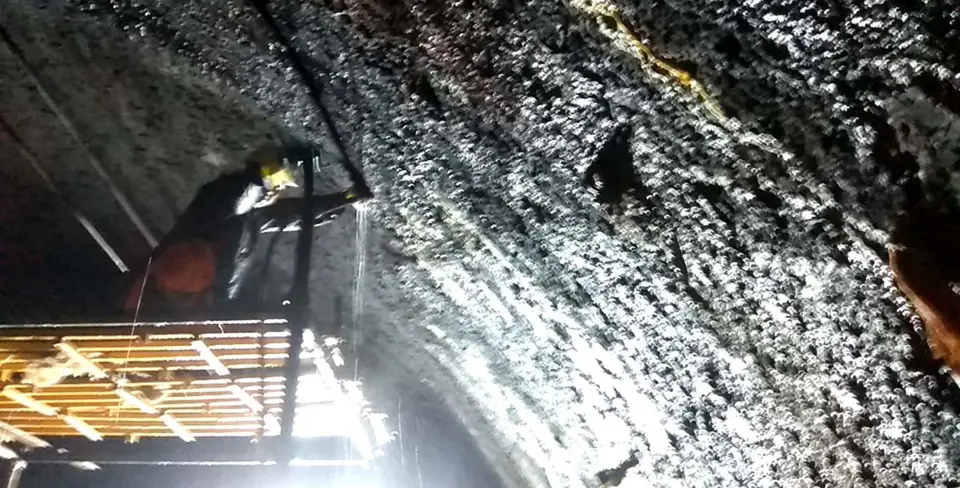
Parsik tunnel, Thane–Kalyan
Seepage controlled in a brick-lined railway tunnel built in 1916, on a busy main line, without stopping the trains.
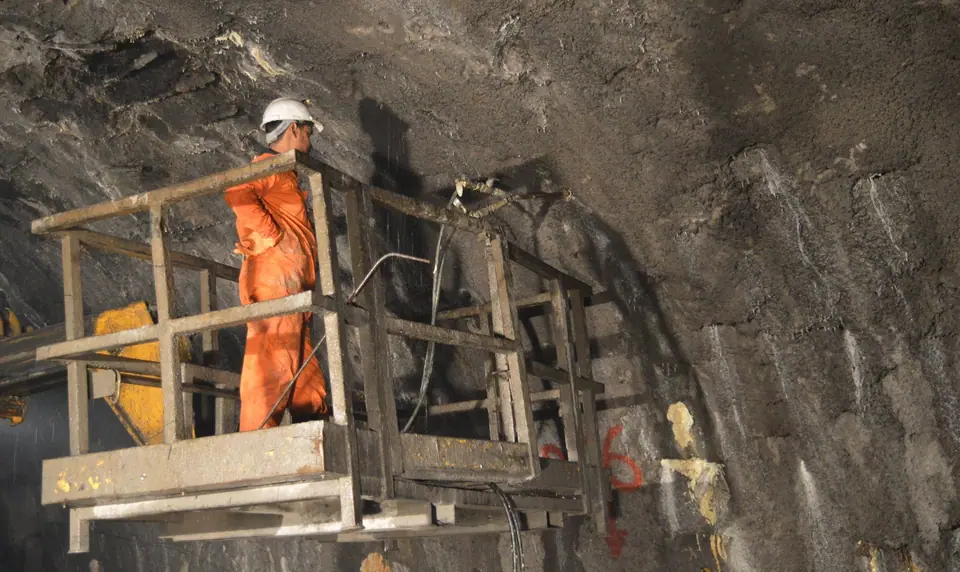
USBRL tunnels T-1, T-3 and T-5, Katra
Heavy water ingress in Himalayan tunnels, controlled with our resin, grout design and crews: recorded by Northern Railway at up to 2,500 litres per minute.
T-49B escape tunnel, Arpinchala, USBRL
Cavities in a Himalayan escape tunnel treated with low-foaming and water-reactive PU resins: one of the two largest chemical grouting jobs we have held.
A similar problem on your site?
An engineer reviews it and replies with the next step.