Railways · Tunnels
USBRL tunnels T-1, T-3 and T-5, Katra
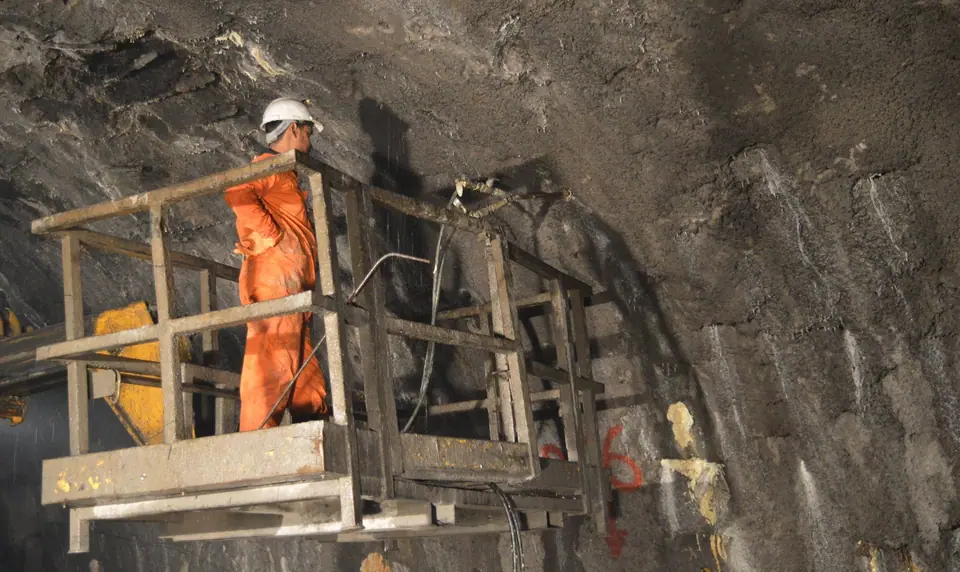
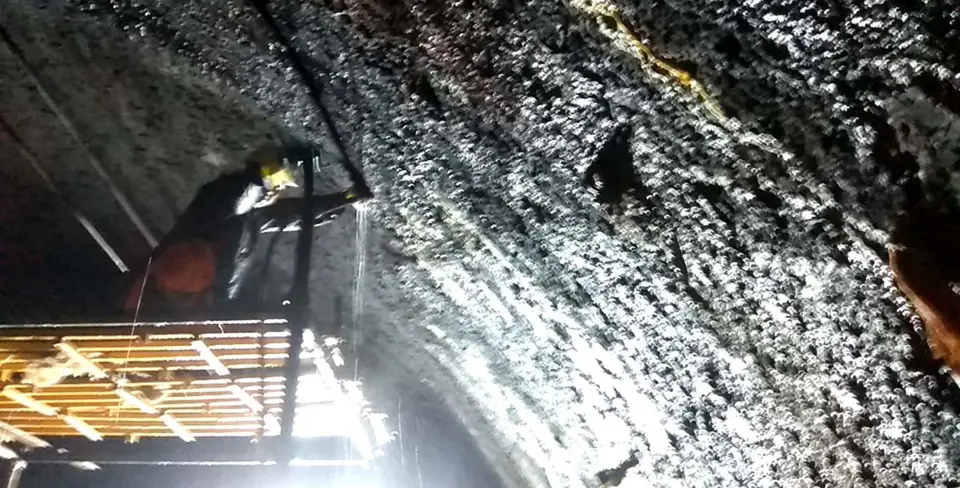
The Katra end of the USBRL runs through young Himalayan rock that carries a great deal of water. In tunnels T-1, T-3 and T-5, our DrucHyd 2C resin, our grout designs and our application crews were used to control water ingress that Northern Railway recorded at up to 2,500 litres per minute.
- Period
- 2015–16 and 2022
- Location
- Katra end of the USBRL, Jammu & Kashmir
- Type
- Railway tunnels
- Owner
- Northern Railway, USBRL project
- Our role
- Grout design, DrucHyd 2C resin, application
Client lettersLetter from Northern Railway’s USBRL project office, 28 April 2016; work satisfaction certificate from Max Infra (I) Ltd for tunnels T-3 and T-5, July 2016; testimonial from ABCI Infrastructures for tunnel T-1.
Seepage controlled inside the tunnels, as recorded by Northern Railway in April 2016.
Tunnels where our grout design and application were found effective and satisfactory: T-1, T-3 and T-5.
The problem
Water through fractured Himalayan rock
Heavy water ingress through fractured, water-bearing rock made excavation slow and hazardous, and in places stopped it.
What we did
Our resin, our design, our crews
- We supplied DrucHyd 2C, our two-component water-reactive polyurethane, and provided grout design and application services at T-1, T-3 and T-5.
- For tunnel T-1, later re-awarded to ABCI Infrastructures, we supplied DrucHyd 2C again in 2022 and worked with ABCI’s team on the product design and injection concept.
- 1Note 1: Water-bearing joints and fractures in the rock around the tunnel.
- 2Note 2: Leaks through cracks and construction joints in the lining.
- 3Note 3: Holes drilled through the lining into the rock, in a pattern set by the leak map.
- 4Note 4: A packer seals each hole, so the resin goes into the ground and not back into the tunnel.
- 5Note 5: Water-reactive PU (DrucHyd 2C) expands on contact with water and fills joints and voids behind the lining.
- 6Note 6: The treated ring cuts the water off before it reaches the lining.
- 7Note 7: Inflow is mapped and measured before treatment, and measured again after it.
On recordNorthern Railway’s USBRL project office recorded in writing, in April 2016, that our grout design and application had controlled heavy seepage of up to 2,500 litres per minute inside the tunnels.
Published“Use of DrucHyd-2C (polyurethane) grout in Himalayan tunnelling”, INDOROCK 2016, 6th Indian Rock Conference, IIT Bombay, June 2016. About the paper →
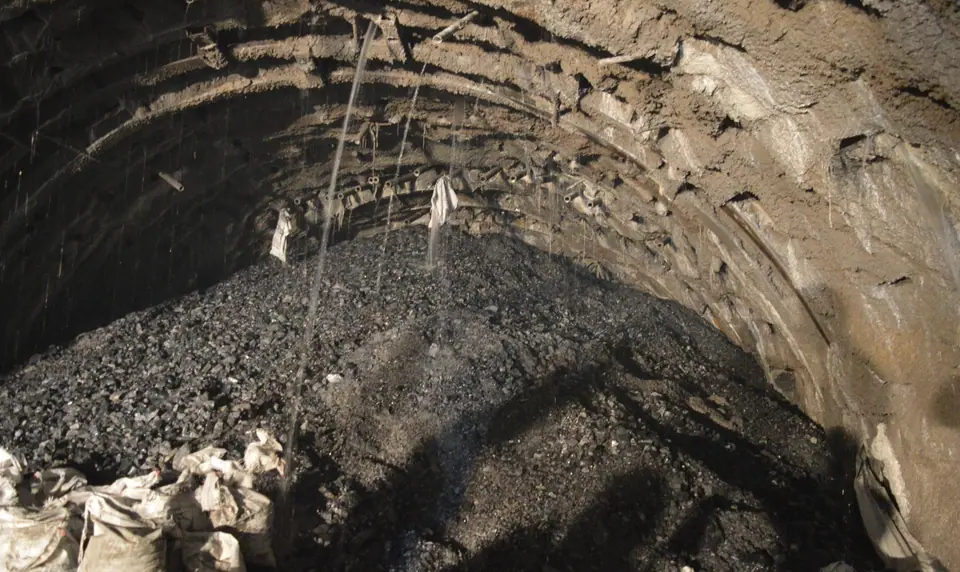
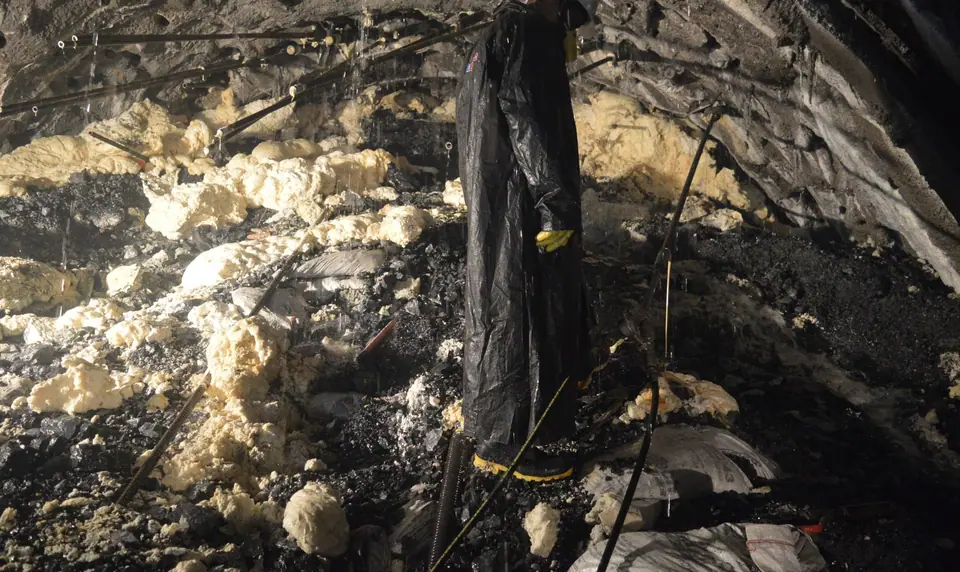
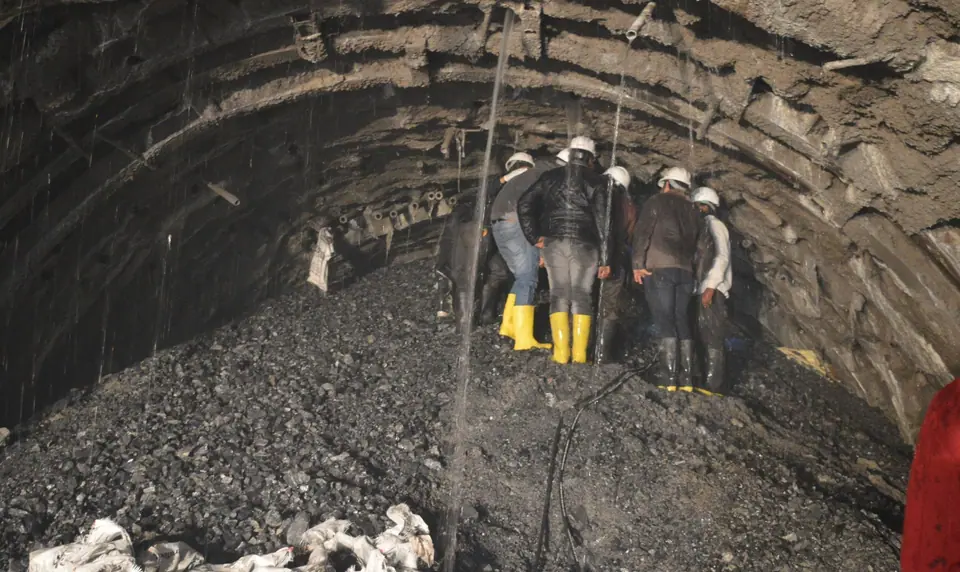
Site photographs
From the site team
Services on this job
Methods used
“Very trustworthy Grouting partner.”
More projects
Similar work
T-46 P2, Sangaldan, USBRL
Ballastless track that settled further every monsoon, lifted back to its design profile on a live line, with the ground beneath made stable.
Parsik tunnel, Thane–Kalyan
Seepage controlled in a brick-lined railway tunnel built in 1916, on a busy main line, without stopping the trains.
T-49B escape tunnel, Arpinchala, USBRL
Cavities in a Himalayan escape tunnel treated with low-foaming and water-reactive PU resins: one of the two largest chemical grouting jobs we have held.
A similar problem on your site?
An engineer reviews it and replies with the next step. The client documents behind this project are sent on request.