Railways
T-46 P2, Sangaldan, USBRL
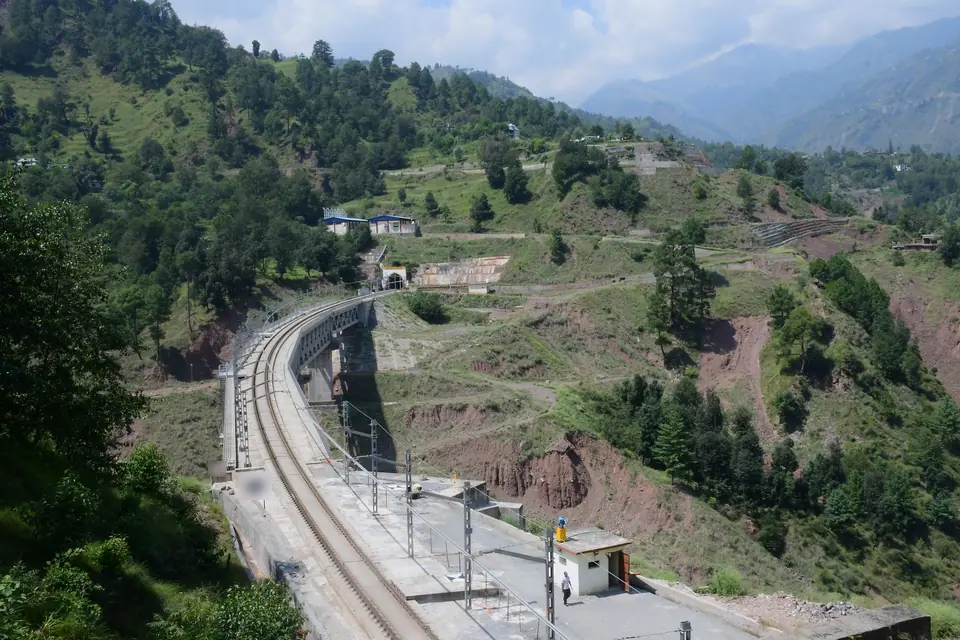
Settled ballastless track between Portal 2 of Tunnel T-46 and Bridge No. 239 at Sangaldan on the USBRL, lifted back to its design profile on live track, inside night blocks, with Vande Bharat and freight trains running over it every day.
- Year
- 2025–26
- Location
- Sangaldan, USBRL, Jammu & Kashmir
- Type
- Railway, ballastless track
- Owner
- Northern Railway
- Client
- Konkan Railway Corporation Limited (KRCL)
CertifiedWork certified satisfactory by Konkan Railway Corporation Limited, February 2026.
Largest lift, on the most settled slab.
Residual settlement, measured after traffic resumed.
Correction inside the tunnel. Design profile and cant restored on the curve.
- No cracking in the slabs; rail fastenings remained tight.
- No traffic block beyond the planned night blocks.
- Work certified satisfactory by KRCL, February 2026.
The problem
Track that settled further every monsoon
The Udhampur-Srinagar-Baramulla Rail Link carries Vande Bharat and freight trains through young Himalayan geology. Soon after commissioning, the ballastless track between Portal 2 of Tunnel T-46 and the approach to Bridge No. 239 began to settle, and its profile distorted into highs and lows. The track sits on a 635 m radius curve with cant, so every correction had to be made on each rail separately.
Level surveys showed the settlement growing by about half in the two monsoon months of 2025. Lifting the slabs alone would not have held: the next monsoon would have softened the formation again. KRCL needed the track back to its design profile and the ground below it made stable, without stopping traffic on a single line where trains could not be diverted.
Field conditions
What the ground and the site gave us
- Track slabs of very different lengths, from 6.0 m to 57.6 m, across a tunnel, an embankment and a bridge approach.
- A 635 m radius curve with cant.
- Saturated, soft formation, with slush and free water about 1 m below the surface.
- Water entering from the hill side and washing fines out towards the valley under passing trains.
- Low-stiffness zones in the MASW survey, exactly where the settlement was greatest.
- Night temperatures below 5°C during execution.
Challenges
Working on a line that never closes
- Live track throughout: Vande Bharat, passenger and heavy freight trains every day.
- Work only in night blocks, with about 5 to 6 effective hours, and the track cleared before the first train.
- Drilling beside 25 kV overhead equipment, so drilling only under power blocks.
- Lifting slabs of very different lengths without cracking them at the joints.
- Holding the cant while lifting, with separate quantities and pressures for each rail.
What we did
Map the ground, lift the slabs, cut off the water
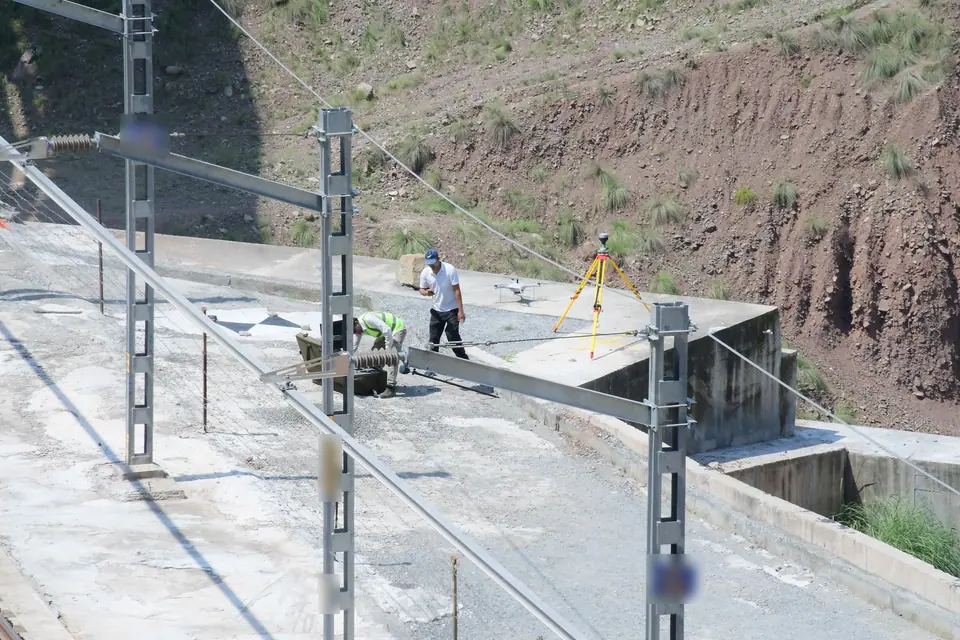
We mapped the ground before touching the track: level surveys and an MASW survey located the weak, saturated zones under the slabs. The slabs were then lifted with our high-density hydrophobic PU, PuTeRA Level Up, in steps of 15 to 20 mm per cycle so the concrete could reseat without cracking. The gap under each lifted slab was filled with fibre-reinforced, non-shrink cementitious grout, the formation along the slab edges was permeation grouted to 1 m, and a grout curtain was placed on the hill side with self-drilling anchors to 2.5 to 3 m to cut off the water. A second MASW survey after the work confirmed the gain in ground stiffness. The line stayed open throughout.
- 1Note 1: Cant held: each rail lifted separately, with its own quantities and pressures.
- 2Note 2: PuTeRA Level Up injected under the slab, 15 to 20 mm of lift per cycle.
- 3Note 3: Gap under the lifted slab filled with fibre-reinforced, non-shrink cementitious grout.
- 4Note 4: Formation along the slab edges permeation grouted to 1 m.
- 5Note 5: Grout curtain with self-drilling anchors to 2.5 to 3 m on the hill side.
- 6Note 6: Water from the hill side, cut off at the curtain instead of washing fines to the valley.
- 7Note 7: Saturated formation with free water about 1 m below the surface. MASW before and after confirmed the stiffness gain.
Quantities executed
- MASW surveys
- 2
- PU injected for slab lifting
- about 5,980 kg
- Void and cavity filling
- about 6.05 t
- Permeation grouting, with self-drilling anchors to 3 m
- about 109.5 t
- Sleeper holes core-drilled, sleeved and epoxied
- 264
- Epoxy beneath the rail base plates
- 540 kg
Site photographs
From the site team
Services on this job
Methods used
- Track re-levelling by PU slab jacking
- Contact grouting under the slab
- Permeation and curtain grouting of the formation
- MASW survey before and after treatment
Track and slab re-levelling
Settled ballastless track and slabs lifted back to level by PU injection, on live lines.
Permeation and chemical grouting
Weak, loose or wet ground strengthened and sealed by resins and gels that fill it without moving it.
Curtain and consolidation grouting
Seepage cut-offs and foundation consolidation for dams, barrages, shafts and structures.
Ground investigation and monitoring
ERT, GPR and MASW surveys, boreholes, lab tests and instruments, before and after treatment.
“The agency has demonstrated high technical competency in executing precision sub-surface stabilization and track geometry restoration.”
More projects
Similar work
Parsik tunnel, Thane–Kalyan
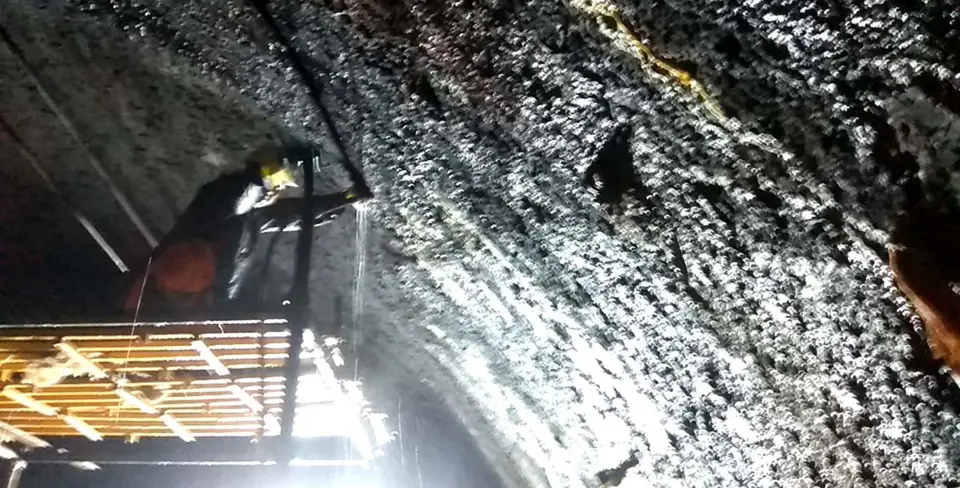
Seepage controlled in a brick-lined railway tunnel built in 1916, on a busy main line, without stopping the trains.
USBRL tunnels T-1, T-3 and T-5, Katra
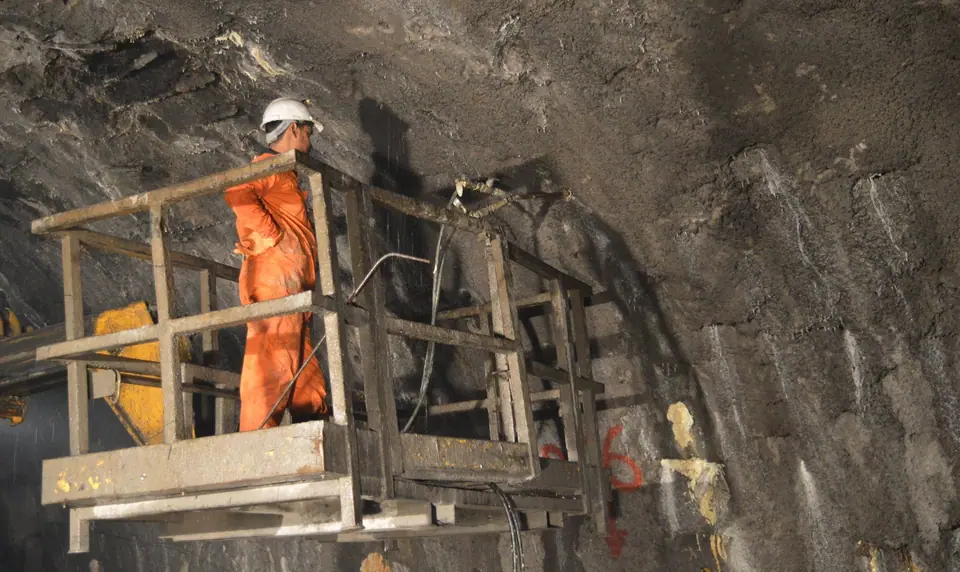
Heavy water ingress in Himalayan tunnels, controlled with our resin, grout design and crews: recorded by Northern Railway at up to 2,500 litres per minute.
T-49B escape tunnel, Arpinchala, USBRL
Cavities in a Himalayan escape tunnel treated with low-foaming and water-reactive PU resins: one of the two largest chemical grouting jobs we have held.
A similar problem on your site?
An engineer reviews it and replies with the next step. The client documents behind this project are sent on request.