Railways · Tunnels
Parsik tunnel, Thane–Kalyan
The Parsik tunnel is a 1.3 km brick-lined railway tunnel on the Thane–Kalyan main line, built in 1916. One stretch ran with water every monsoon and kept dripping into the winter. We brought it under control with chemical grouting and self-drilling rock bolts, working around live traffic.
- Completed
- January 2019
- Location
- Thane–Kalyan section, Mumbai region
- Type
- Railway tunnel, brick-lined, 1.3 km
- Owner
- Central Railway
- Client
- Shree Krishna Construction (SKCE)
CertifiedCompletion and performance certificates, with CIMFR co-certification. Completed 14 January 2019.
Lugeon value of the rock before and after grouting, as recorded on the client’s certificate.
The year the brick-lined tunnel was built.
- Seepage in the treated section brought under control.
- The rock around the arch consolidated with DrucHyd 2C.
- The track protected from the water that had been corroding it.
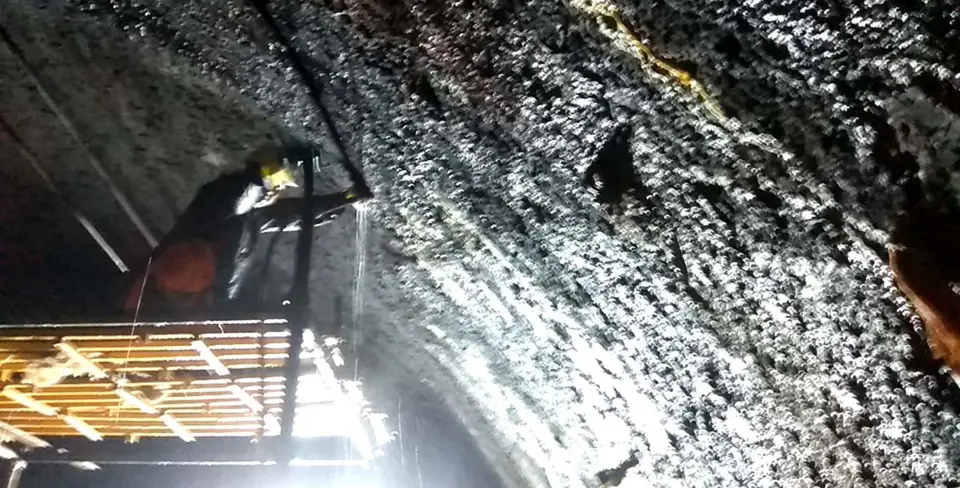
The problem
A century-old arch, losing to water
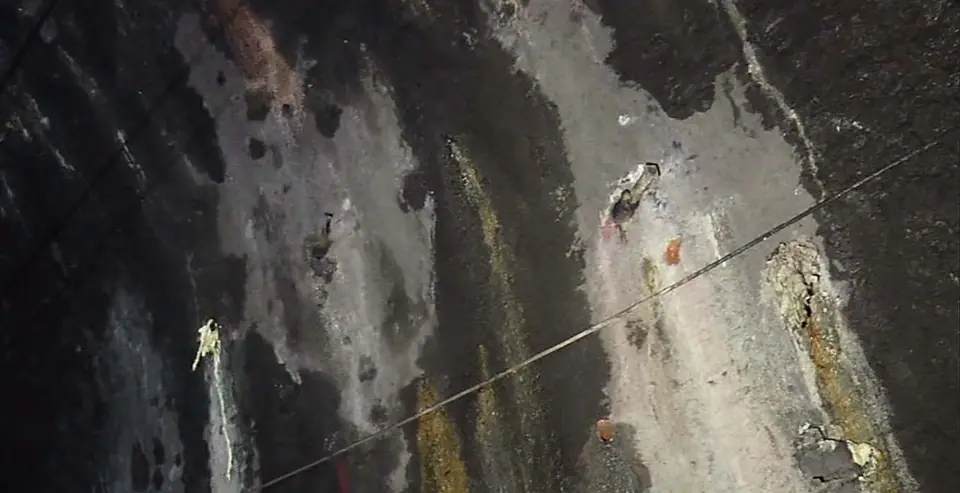
A section inside the tunnel took severe seepage through the monsoon, and the water kept dripping at many points until December or January. Age, and heavy encroachment on the hill above, had weakened the arch over the running lines, and rust had started on the rails.
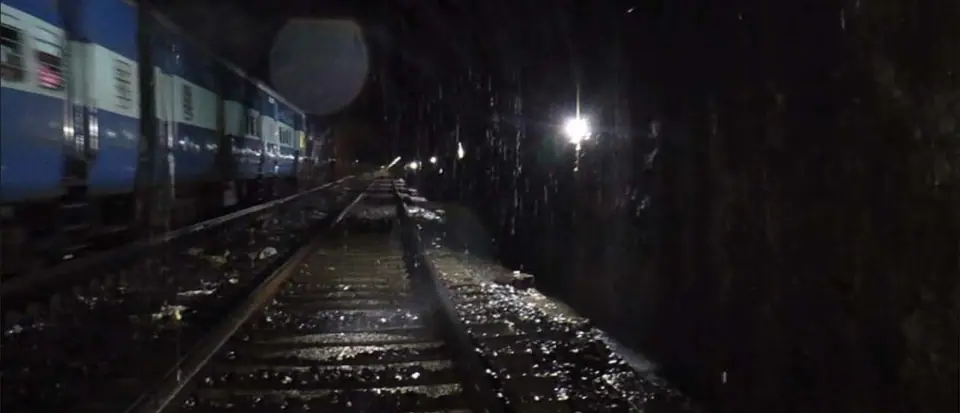
Traffic could not be stopped. The tunnel carries a main line, so every step had to fit around the trains.
Challenges
What made it hard
- Little working space.
- Limited working hours between trains.
- Water coming in continuously.
- Poor geology behind the lining.
- High-voltage overhead line along the tunnel.
- No ventilation duct.
What we did
Survey first, then the chemistry and the geometry
- Several site surveys mapped the leaks and the condition of the lining before a method was chosen.
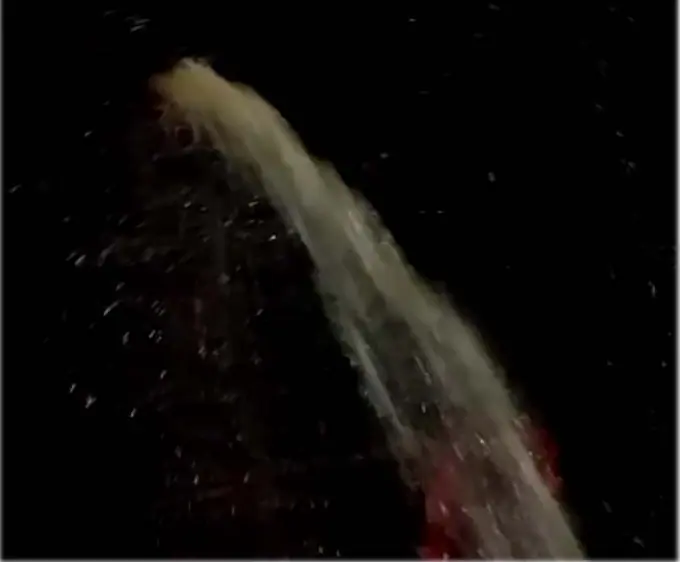
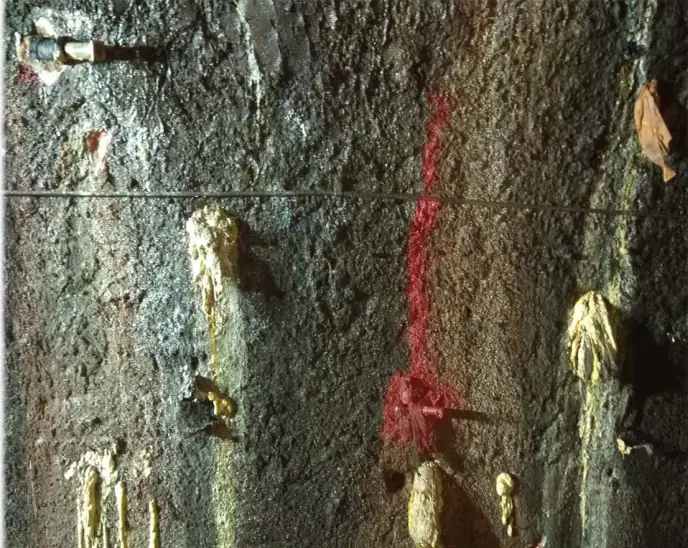
- DrucHyd 2C, our two-component water-reactive polyurethane, was injected through holes in the lining and driven radially into the jointed rock behind it.
- Self-drilling anchor rock bolts tied the treated zone together.
- Optical targets on the lining watched for distress and set how much grouting pressure could safely be used.
- Many tasks were automated so the crew spent as little time on the track as possible. Where leaking zones could not be reached, the drilling was modelled before it began.
- 1Note 1: Water seeping through the masonry arch, worst in the monsoon.
- 2Note 2: Brick-lined arch, more than a century old.
- 3Note 3: Holes drilled from inside the tunnel, through the lining and into the rock behind it.
- 4Note 4: Two-component PU injected and driven radially into the jointed rock.
- 5Note 5: Self-drilling anchor rock bolts tie the treated zone together.
- 6Note 6: Optical targets on the lining show any movement and set how much grouting pressure is safe.
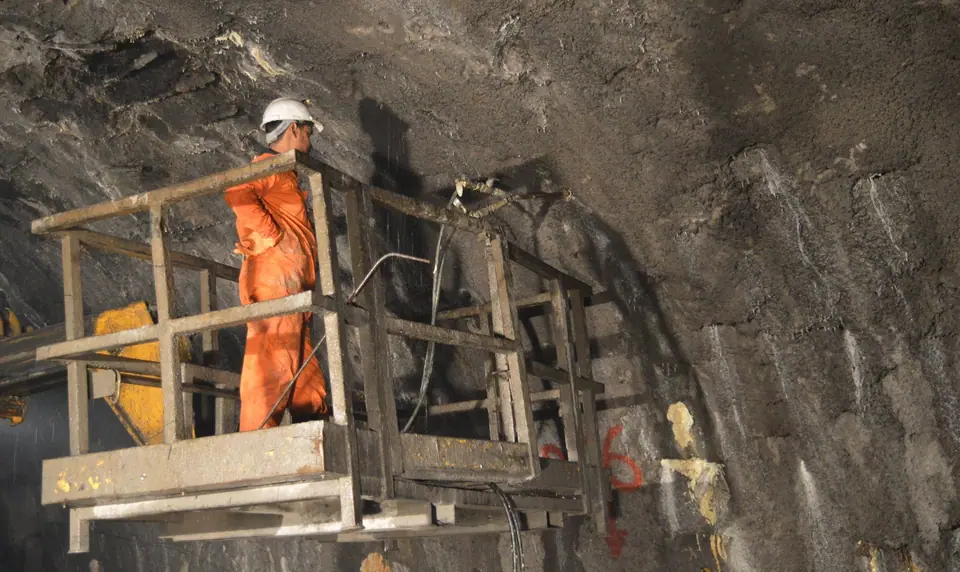
- 7Note 7: Trains keep running. The work fits between them, under the live overhead line.
Published“Controlling water incursion in Parsik tunnel in Mumbai using chemical grouting of DrucHyd-2C”, Tunnelling Asia 2019, Tunnelling Association of India, Mumbai, February 2019, pp. 155-162. About the paper →
Site photographs
From the site team
Services on this job
Methods used
Tunnel rehabilitation
Old and operating tunnels: seepage stopped, ground consolidated and lining repaired, under traffic.
Tunnel water ingress control
Leaks and inflow stopped in tunnels, shafts and underground structures.
Rock bolting and self-drilling anchors
Rock bolts, self-drilling and prestressed anchors for tunnels, portals, slopes and caverns.
CertifiedCompletion and performance certificates, with CIMFR co-certification. Completed 14 January 2019.
More projects
Similar work
T-46 P2, Sangaldan, USBRL
Ballastless track that settled further every monsoon, lifted back to its design profile on a live line, with the ground beneath made stable.
USBRL tunnels T-1, T-3 and T-5, Katra
Heavy water ingress in Himalayan tunnels, controlled with our resin, grout design and crews: recorded by Northern Railway at up to 2,500 litres per minute.
T-49B escape tunnel, Arpinchala, USBRL
Cavities in a Himalayan escape tunnel treated with low-foaming and water-reactive PU resins: one of the two largest chemical grouting jobs we have held.
A similar problem on your site?
An engineer reviews it and replies with the next step. The client documents behind this project are sent on request.